Hybrid working has made learning easier to distribute.
A workshop can be virtual. Videos can sit on demand. Coaching can happen from anywhere.
People across several countries can join the same programme without anybody setting foot in an airport.
Of course, this is all very useful, but personal development is about more than access.
If you want someone to communicate more confidently, influence a difficult stakeholder, collaborate better or handle a conversation they would rather avoid forever... they eventually have to do it.
That is why the best personal development solutions for hybrid teams tend to combine access with practice, application and reinforcement.
The question is not simply how can we deliver this to everyone? Instead, it is what do we need people to do differently afterwards?

Which personal development solutions work for hybrid teams?
There is no single best format because different approaches solve different problems.
On-demand learning works well when people need knowledge, refreshers or quick support at the point of need. It is flexible, easy to access and useful across time zones. But watching something and doing something are different things.
If the skill involves other humans, particularly communication, influence, feedback or conflict, people usually need opportunities to practise. Live virtual learning can provide that interaction without bringing everybody into the same room. Done well, it gives people opportunities to discuss, practise, receive feedback and learn alongside colleagues in other locations.
The important bit is the "done well" part. Putting a six-hour classroom workshop on Teams does not magically make it virtual learning. It mostly makes six hours feel unusually long as energy levels among participants will drop dramatically with each passing hour.
In-person learning still has value when the development relies heavily on human interaction, relationship-building or deeper practice. And then there is blended learning, which combines different formats around the same development goal.
Someone might complete a short digital activity, join a live session, practice something back at work and revisit the learning afterwards. For behaviour change, this can be particularly powerful because development is given time to survive contact with someone's actual job.
Excel delivers learning through blended, virtual, in-person and on-demand formats, depending on what the organisation and its people need.
What should you look for in a hybrid personal development solution?
Start with the behaviour and not the platform, not the course catalogue and not whether the provider has produced a particularly attractive diagram showing six circles connected by arrows.
Ask what people need to become better at.
If employees need more confidence presenting, where is that confidence currently disappearing? If managers need better communication skills, which conversations are going wrong? If hybrid teams need to collaborate better, what does poor collaboration actually look like day to day?
Once that is clear, you can judge whether the learning solution gives people a realistic chance of changing it.
For a large organisation, I would look particularly closely at:
- how the provider understands your organisation before designing anything
- whether people get opportunities to practise rather than simply consume content
- whether the learning can flex across virtual, in-person and digital formats
- what happens after the formal learning finishes
- how the provider will evaluate whether behaviour actually changed
- whether the programme can be delivered consistently across locations
That last point is less exciting than learning design. It is also quite important when 600 people need to attend.
Excel's approach uses five phases: Discover, Design, Deliver, Evaluate and Embed. The intention is to understand the organisation first, create learning around that context and then support what happens after delivery rather than treating the workshop as the finish line.
Its Learning Operations team also supports programme logistics, timelines, trainers and global coordination. Because sometimes the difference between a good programme and an absolute administrative nightmare is not particularly glamorous. It is operations.

How do you make personal development stick in a hybrid team?
Imagine somebody attends a brilliant session on giving feedback. They get the opportunity to practice what they learn, they understand what good looks like in relation to the skill and they have every intention of using this upon their return to work
Their return to work then happens, and a few weeks later they are required to have a conversation that may be seen to be difficult.
What brings the learning back from the session they attended?
Maybe it is a short video. It could be a prompt. Possibly a conversation with their manager. Perhaps it is a follow up session. It may even be the opportunity to continue practicing with their colleagues or access to a useful tool that they can revisit before the discussion.
The exact method matters less than recognising that development does not end when the live session window closes or everybody leaves the training room.
For hybrid teams in particular, reinforcement needs to be designed in rather than left to chance.
How should you measure personal development?
Let's lay out some facts here... Attendance tells you that somebody attended, completion tells you that they completed something and feedback tells you what they thought of it.
This is all useful.
But if the programme exists to change behaviour, sooner or later you need to look for behaviour. Are managers having conversations earlier? Are people contributing more confidently? Are teams communicating more clearly? Are employees actually using what they learned?
The measures will depend on the programme, but the principle is fairly simple. Decide what should change before you decide how to measure it.
Otherwise, it is very easy to end up with excellent completion statistics and absolutely no idea whether anything useful happened.
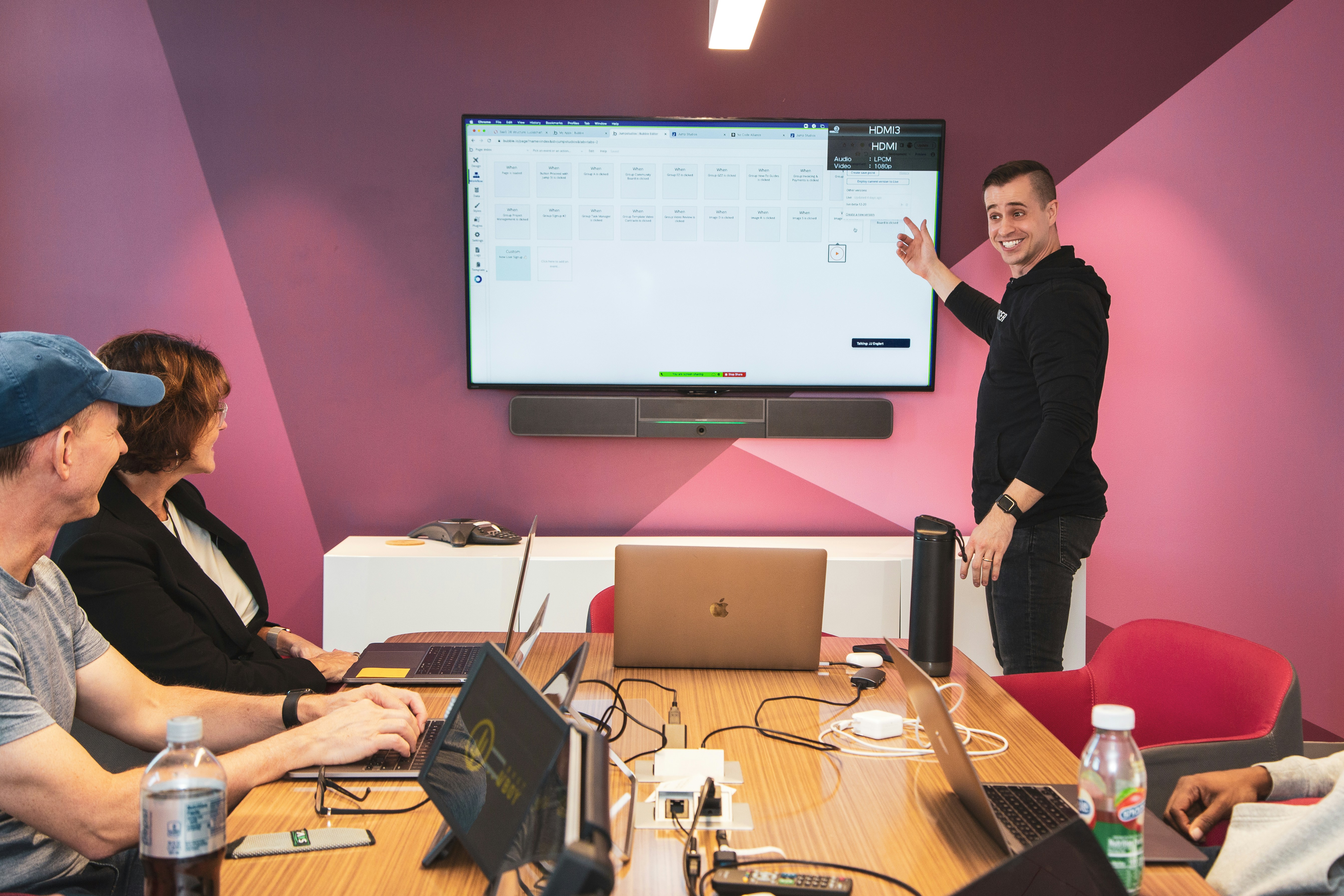
The best hybrid solution starts with the work
Hybrid organisations have more learning options than ever which is a very good thing.
But having more formats does not make the decision for you because sometimes people need a quick digital resource, sometimes they need a coach, sometimes they need to sit in a room together and practise something uncomfortable.
Often they need a mixture.
So when comparing personal development solutions for hybrid teams, start with the work itself.
What needs to change? Where will people use the skill?
What will make it difficult?
Then choose the learning around that, because hybrid development should not be about finding one format that works everywhere. It should be about using the right format when it matters.
Many thanks,

Alex & The Excel Team